If you have exactly one day for Vienna’s Innere Stadt (the 1st district, postal code 1010), the fastest way to waste it is wandering without a route. The old town is compact enough to cover on foot in a few hours, but its best corners sit just off the obvious main streets, and it’s easy to loop back on yourself without realizing it. This is a stop-by-stop walking route through the historic core, built around the landmarks that actually anchor the district: St. Stephen’s Cathedral, the Graben, Kärntner Straße, the Hofburg, and the State Opera.
Why the Innere Stadt is Vienna’s real starting point
The 1st district is where Vienna was originally a walled Roman and then medieval city, and the layout still shows it: a dense, roughly circular core surrounded by the Ringstrasse boulevard, with narrow lanes radiating out from a handful of central squares. Almost every “must-see” list for Vienna is really a list of things inside or bordering the Innere Stadt. That makes it the natural place to start a first visit, but it also means the district gets crowded, especially between the cathedral and Graben in midday. Starting early, or at least starting with a plan, makes a real difference.
The route: six stops, roughly 2-3 hours on foot
This route is designed as a loop, so you end up reasonably close to where you started. It works in either direction, but starting at the cathedral gives you a clear landmark to orient around from the first stop.
1. St. Stephen’s Cathedral (Stephansdom)
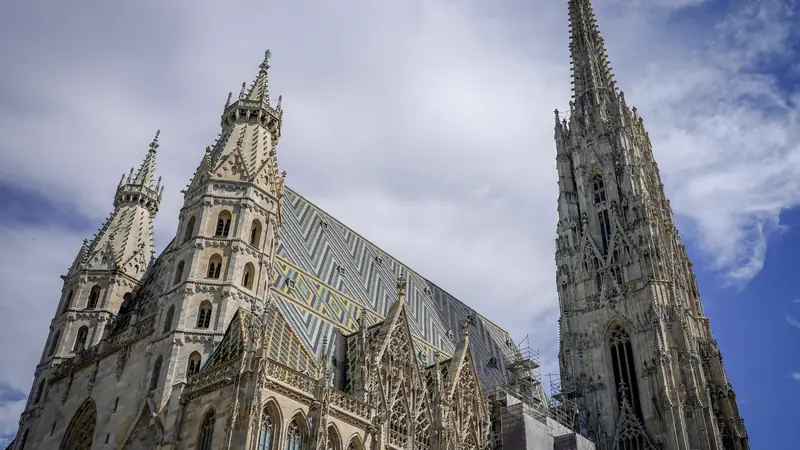
Start at Stephansplatz. The cathedral’s patterned tile roof and the south tower, nicknamed “Steffl,” are the visual anchor of the entire old town — you’ll use its spire to orient yourself for the rest of the walk. Circle the exterior first to see the different building phases (the mismatched towers are the giveaway that construction stretched across centuries), then decide whether to go inside or climb the tower. The north tower has an elevator; the south tower is a narrow spiral staircase with genuinely excellent views if you don’t mind roughly 340 steps.
2. Graben
From Stephansplatz, walk a couple of minutes northwest onto the Graben, a wide, elegant street that was literally a moat (the name means “ditch”) in the city’s medieval fortifications before it was filled in and built over. Today it’s lined with grand facades, cafés, and the Pestsäule (Plague Column), a dramatic Baroque monument commemorating the end of a 17th-century plague outbreak. It’s a good spot to slow down for a coffee before continuing.
3. Kärntner Straße
Double back past the cathedral and head down Kärntner Straße, the Innere Stadt’s main pedestrian shopping street, running south toward the Ringstrasse. It’s busier and more commercial than the Graben, but it’s also the direct walking link between the cathedral and the State Opera, so it’s worth using as a connector rather than skipping. Look up occasionally — the street-level shopfronts get the attention, but the upper floors have some good architectural detail that’s easy to miss.
4. State Opera (Wiener Staatsoper)
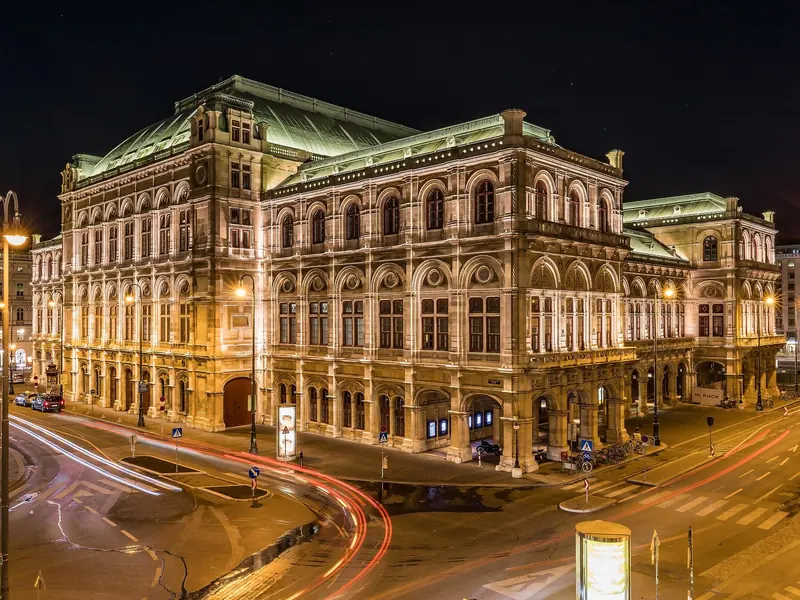
Kärntner Straße ends at the Ringstrasse, right at the State Opera. Even if you’re not attending a performance, the exterior is worth a stop, and standing-room tickets for same-day performances are one of Vienna’s better-kept budget-travel secrets if the timing works out. This is also a natural point to decide whether to continue into the Hofburg or take a short detour along the Ringstrasse first.
5. The Hofburg
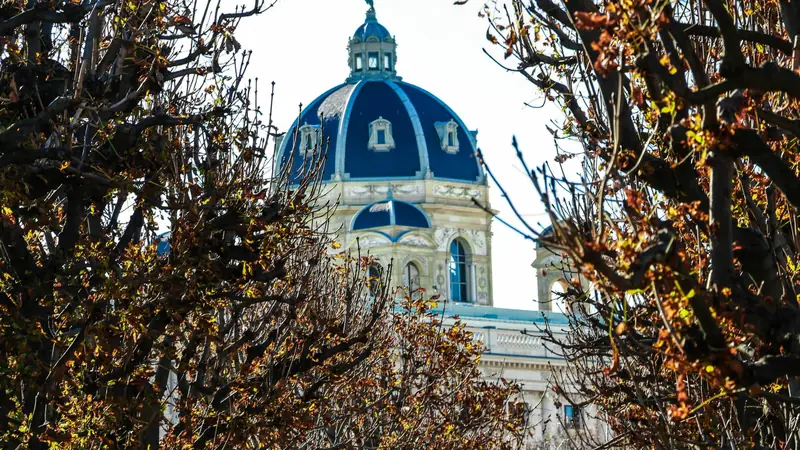
From the Opera, it’s a short walk to the Hofburg, the former imperial palace complex that now houses, among other things, the Austrian president’s office, several museums, and the Spanish Riding School. The Hofburg isn’t a single building but a sprawling complex of courtyards built up over roughly six centuries, so budget time to walk through rather than just past it. Michaelerplatz, the square facing the palace’s domed entrance, is worth a pause — the Roman ruins visible under glass in the square are a reminder of just how far back this footprint goes.
6. Back through the old lanes to Stephansplatz
Close the loop by cutting back through the tangle of smaller streets between the Hofburg and the cathedral — Kohlmarkt, Am Graben’s side lanes, and the small squares around Am Hof. This part of the walk has no single headline sight, which is exactly the point: it’s where the district feels most like a place people actually live in, with quieter courtyards, smaller shopfronts, and far fewer tour groups.
Timing it right
- Early morning (before 9:30am) gives you the cathedral and Graben with noticeably fewer people.
- Midday is the busiest window on Kärntner Straße and around the cathedral entrance — fine for shopping, less pleasant for photos.
- Late afternoon light works well for the Hofburg courtyards and Michaelerplatz.
- If you only have two or three hours total, prioritize stops 1, 2, and 5 (cathedral, Graben, Hofburg) and treat Kärntner Straße and the Opera as a walking connector rather than a destination.
What this route misses (on purpose)
This is deliberately a 1st-district route. It doesn’t cover the Museum Quarter, Schönbrunn, or the Naschmarkt, all of which deserve their own half-day or more. Trying to bolt those onto a one-day Innere Stadt walk usually means rushing everything and enjoying none of it. If the old town is your priority, give it the time it deserves and save the rest for a return trip or a separate day.
Doing it with a guide instead of alone
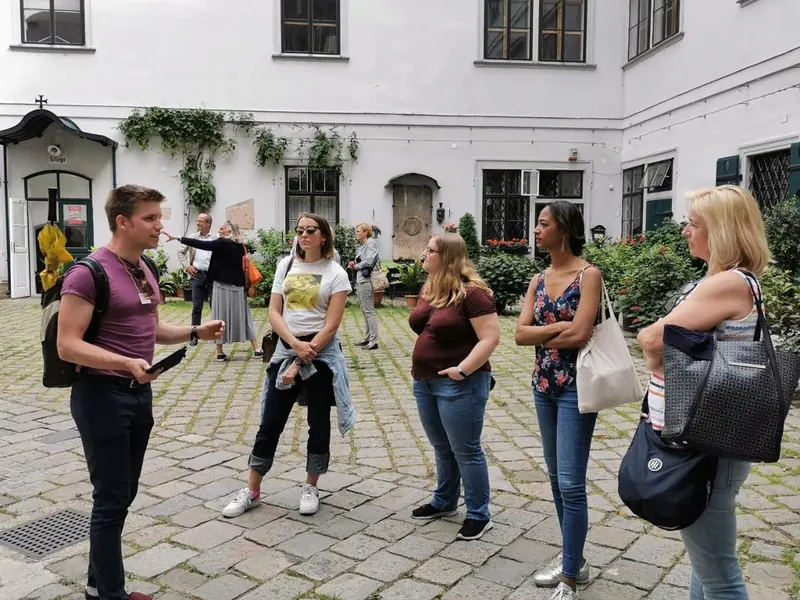
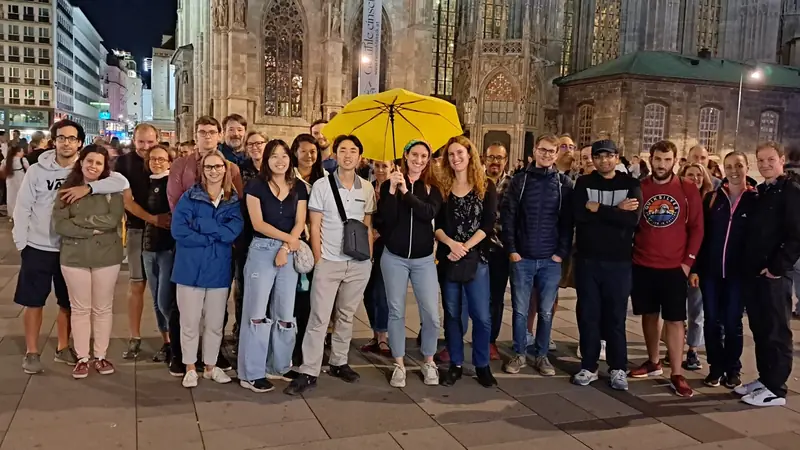
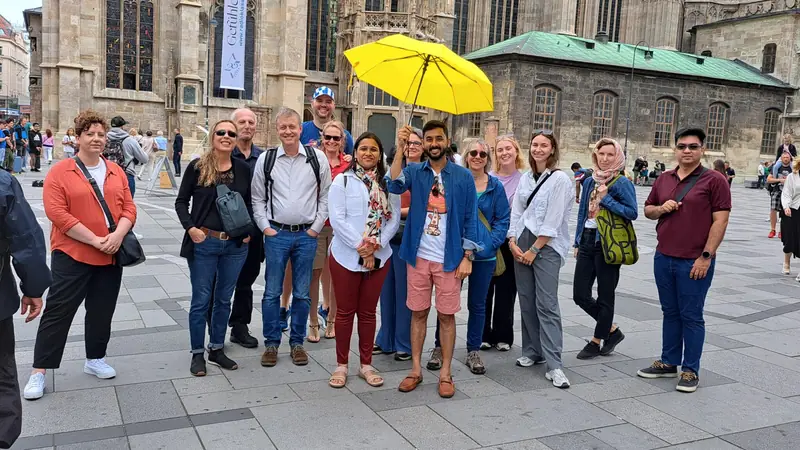
Every stop on this route is also the backbone of Prime Tours’ Free Walking Tour Vienna, which covers this exact stretch of the historical city center with a local guide filling in the context — why the towers don’t match, what actually happened at the Plague Column, how the Hofburg grew across centuries — that’s easy to miss reading plaques alone. It runs on a tip-based model, so there’s no upfront cost if you’d rather try it before deciding it’s worth paying for.
If you’d rather have this route (or a variation of it) run privately, at your own pace and schedule, Prime Tours also offers a Private Experience in Vienna that can be built around the Innere Stadt specifically, or combined with other districts depending on how much time you have.
Practical notes
- The entire route is walkable in comfortable shoes; cobblestones are common throughout the district.
- The nearest U-Bahn stops are Stephansplatz (U1, U3) and Herrengasse (U3), both right on or near this route.
- Cathedral tower visits and museum entries inside the Hofburg have separate tickets and hours that change seasonally — check current opening times before you go rather than assuming a fixed schedule.
- Cafés along the Graben and near the Hofburg get busy at lunchtime; a mid-morning or late-afternoon coffee stop is easier to find a seat for.
Vienna’s 1st district rewards a slow, deliberate walk more than a rushed checklist. Six stops, a loop back to where you started, and a couple of hours of flexibility built in is enough to actually see the Innere Stadt rather than just photograph it.