In short: Advent in Vienna starts on Sunday 29 November 2026 and runs through four candle Sundays to Christmas Eve. Along the way the Viennese cut cherry twigs on 4 December, meet Krampus on 5 December and St Nicholas (the Nikolo) on 6 December, and drink Punsch and Glühwein at the markets. Gifts arrive on the evening of 24 December, brought by the Christkind, not by Santa.
We are Prime Tours, a locally owned Vienna tour company, and we have been showing visitors our city since 2016. Our guests ask the same questions every December: why the wreath with four candles, who is the furry devil, and what is in the mug? Here are the answers, with the dates for 2026.
Advent 2026 at a glance
| Custom | Date in 2026 | Where you see it | Cost |
|---|---|---|---|
| Advent wreath (Adventkranz) | Sundays 29 November, 6, 13 and 20 December | Homes, churches, market stalls | Free to look |
| Barbara twigs (Barbarazweig) | Friday 4 December | A vase at home or in your flat | A few cherry or forsythia twigs |
| Krampus | Evening of Saturday 5 December | Krampus runs, mostly in Alpine towns | Free to watch |
| St Nicholas (Nikolo) | Sunday 6 December | Families, kindergartens, Schönbrunn Children's Museum | Museum ticket |
| Punsch and Glühwein | 13 November to 26 December (Rathausplatz) | Every Christmas market | Price per mug plus a mug deposit |
| Christkind and the gifts | Evening of Thursday 24 December | Family living rooms | Free |
The Adventkranz: four candles, four Sundays
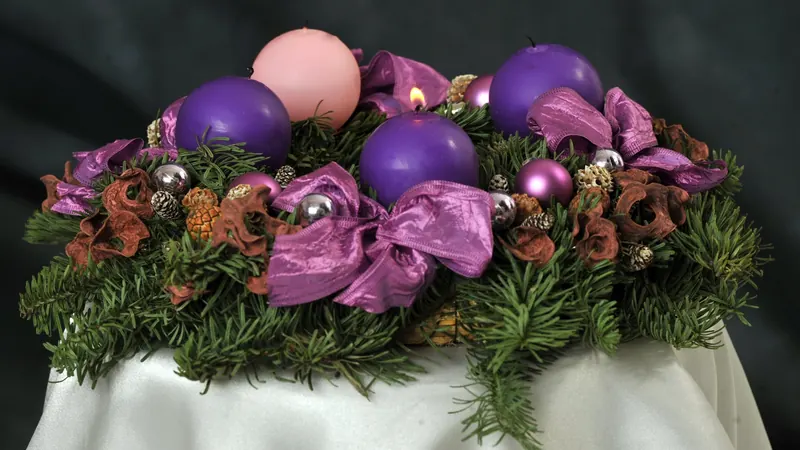
The Advent wreath, called Adventkranz in Austria, is younger than most visitors think. It was invented in 1839 by Johann Hinrich Wichern, a Protestant theologian who ran the Rauhes Haus, a home for poor children in Hamburg. The children kept asking how long it was until Christmas, so he hung a wheel with 24 candles in the prayer hall: four large white ones for the Sundays and 20 small red ones for the weekdays. Lighting one each day also taught the children to count.
Over the years the wreath shrank to the four Sunday candles, gained fir branches and spread from Protestant northern Germany into Catholic homes, including ours. In Catholic regions you often see three violet candles and one pink one. The pink candle is lit on the third Sunday, called Gaudete ("rejoice"). The Catholic book of blessings even has a rite for blessing Advent wreaths.
In 2026 the first candle is lit on 29 November, the second on 6 December, the third on 13 December and the fourth on 20 December.
Guide's tip: in the run-up to the first Sunday, look out for the stalls at the Christmas markets that sell handmade wreaths.
Barbara twigs on 4 December
On 4 December, the feast of St Barbara, many Austrians cut a few twigs from a cherry tree, or from forsythia, apple or plum, and put them in a vase of water in a warm room. If the buds open by Christmas Eve, the coming year will bring luck.
The custom goes back to a legend: on her way to prison, Barbara's robe caught on a branch. She put the broken twig in water and it flowered on the day she died as a martyr. In 2026 Barbaratag falls on a Friday, three weeks before Christmas Eve, which is just about the time cherry buds need indoors.
Krampus and the Nikolo on 5 and 6 December
St Nicholas, a 4th century bishop, is called the Nikolo in Austria. He visits on the evening of 5 December or on 6 December, his feast day, dressed as a bishop. Good children get nuts, fruit and sweets.
The bad ones have the Krampus to deal with. He is the frightening companion of the saint: fur or sheepskin, a carved wooden mask with horns, cow bells or chains, a birch rod and a basket on his back for carrying off naughty children. The figure is probably older than Christianity in the Alps, but written sources only start in the late 16th century. 5 December is Krampus day, and in Alpine towns groups of Krampusse run through the streets with bells and rods in a Krampuslauf. The run in Klagenfurt is considered Austria's largest.
Krampus is not the same as Perchten, although the masks look alike. Krampusse belong to Advent, while Perchten runs take place in the Rauhnächte, the nights around the turn of the year. Vienna's own Krampus legacy is on paper: in the early 20th century Krampus postcards were popular, and a Wiener Werkstätte card from about 1911 sold at auction in 2003 for 11,000 euros.
Guide's tip: travelling with children? Schönbrunn's Children's Museum has a visit from St Nicholas on 6 December, and in 2026 that is a Sunday, so book ahead.
Punsch or Glühwein? What is in the mug
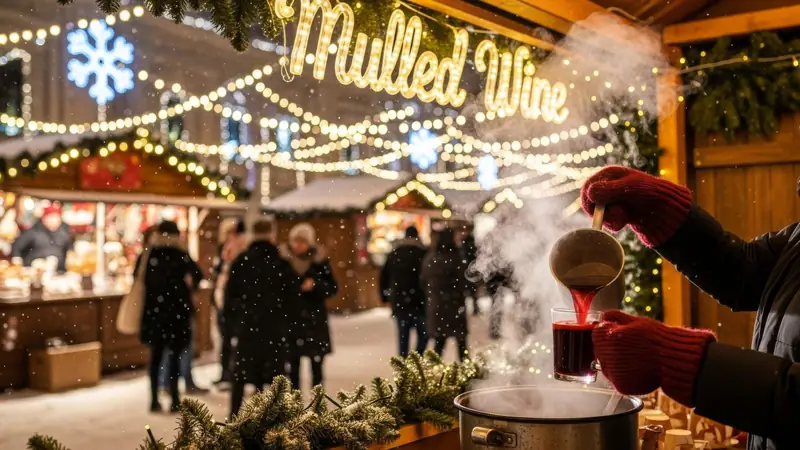
At every Viennese Christmas market you choose between two hot drinks. Glühwein is mulled wine: red or white wine heated with sugar, cinnamon, cloves, star anise and cardamom, often with orange juice and slices of orange and lemon. That is exactly the recipe the city's tourist board publishes for making it at home.
Punsch is the freer of the two. The word comes from the Hindi word for "five", after the five original ingredients: arrack, sugar, lemon, tea or water, and spices. English sailors of the East India Company brought the drink to Europe in the 17th century. Today there is no fixed recipe, so a stall's Punsch can be based on fruit juice, wine, tea or rum.
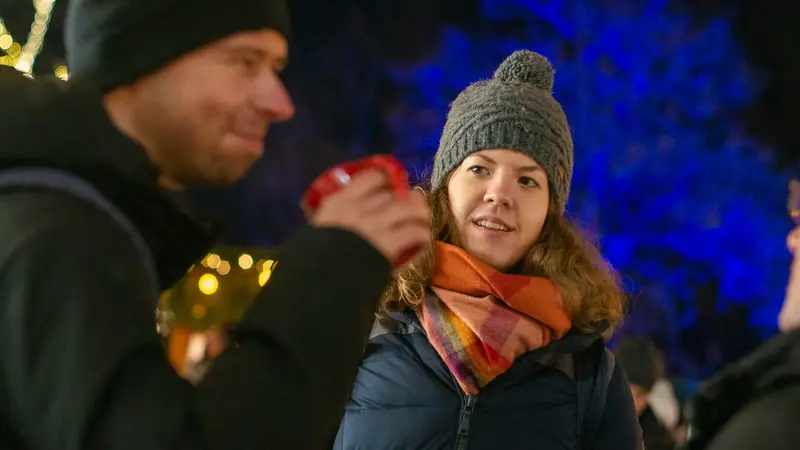
Your drink comes in a ceramic mug, the Häferl, with a deposit added to the price. Return the mug and you get the deposit back, or keep it as a souvenir. For the best mugs and stalls, see our complete guide to Vienna's Christmas markets and our ranking of warming winter drinks in Vienna.
Guide's tip: order your first Punsch at the market where you want to keep the mug, and return the others as you go. Prices and deposits differ between markets, so check the board before you order.
The Christkind, not Santa
In Austria the gifts come from the Christkind, the Christ child, on the evening of 24 December. The idea goes back to Martin Luther, who around 1535 promoted the "holy Christ" as gift bringer instead of St Nicholas. The custom later took root mainly in Catholic regions, Austria among them. Santa Claus has been gaining ground in shop windows, but in a 2012 survey 91 percent of Austrians said the Christkind brings the presents.
The Christkind even has its own post office. In Christkindl, part of Steyr in Upper Austria, a special post office has opened every Advent since 1950. In 2026 it is open from 27 November to 31 December. Children's letters to the Christkind from all over the world are answered there, and around two million letters and cards a year leave with its special postmark. In Austria you can send your Christmas cards "Via Christkindl" with a sticker that costs 1 euro at the post office.
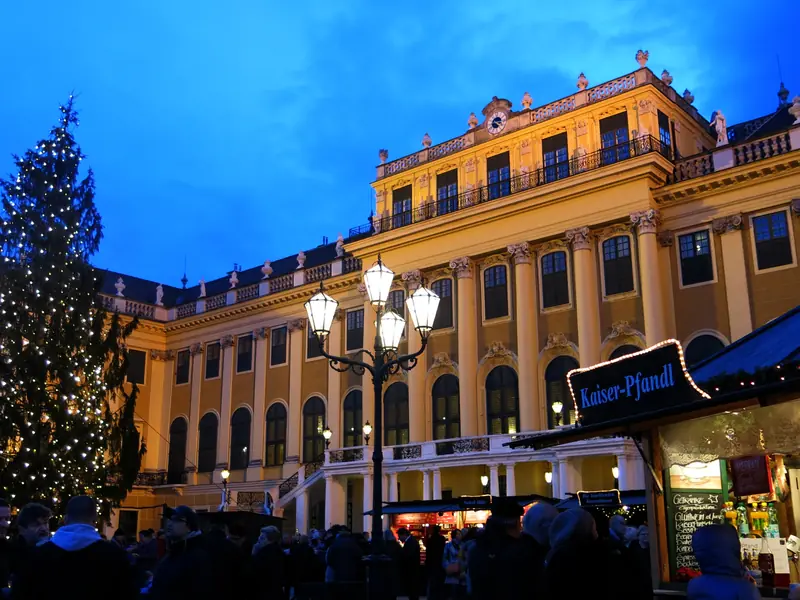
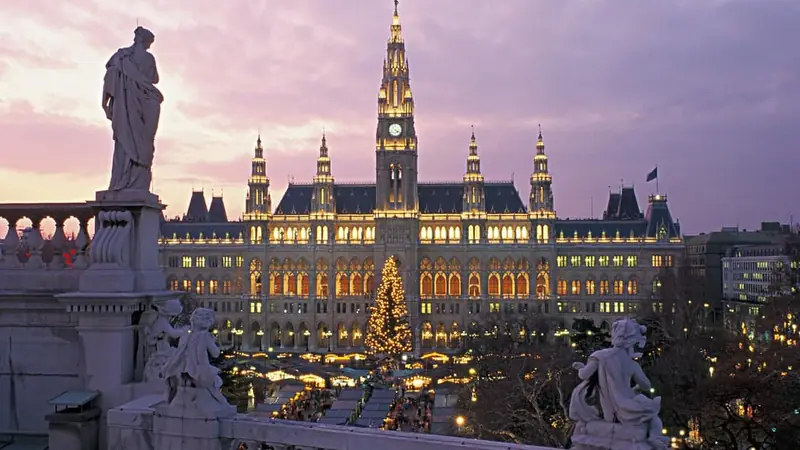
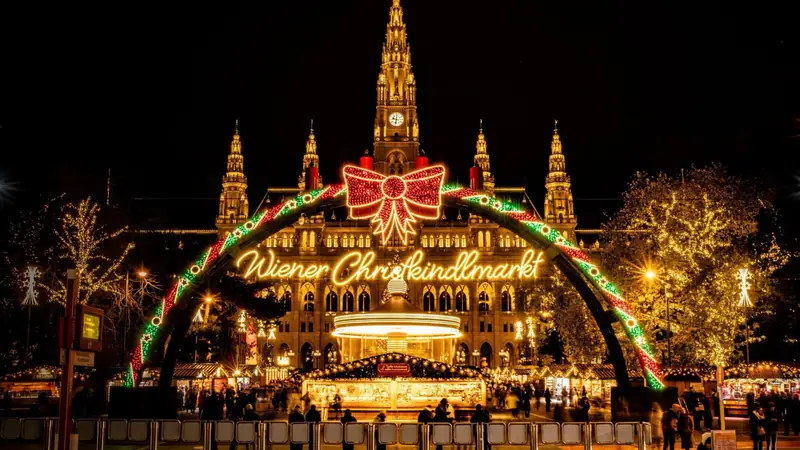
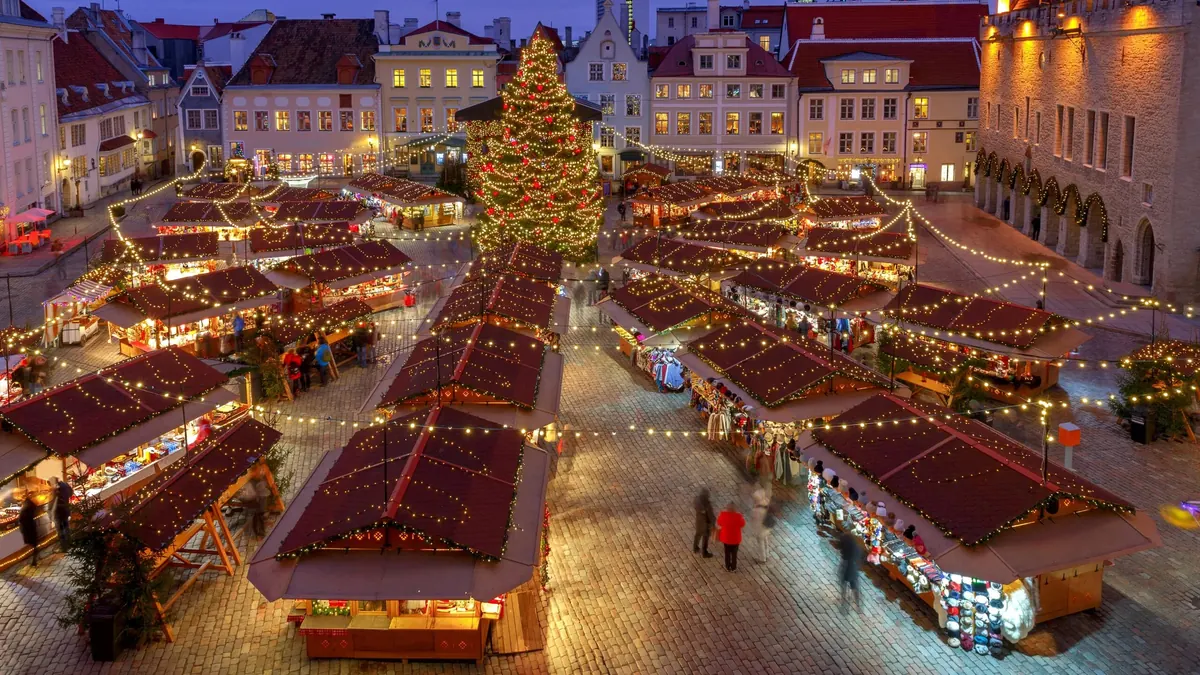
On Christmas Eve the markets close early: the Christkindlmarkt on Rathausplatz is open until 6:30pm on 24 December, the Schönbrunn market until 4pm. After that, Vienna goes quiet and celebrates at home.
More Advent in Vienna: snow globes, chestnuts and cookies
- Snow globes: Vienna's snow globe story began with Erwin Perzy around 1900, and his family's Original Vienna Snow Globe Manufactory has made them for more than 100 years, with St Stephen's Cathedral, the Giant Ferris Wheel or Schönbrunn inside. The recipe for the snow is a secret.
- Hot chestnuts: roasted over coal on street corners all winter. The trade goes back to the 18th century, when Maria Theresa allowed travelling traders to sell them.
- Christmas cookies: at Demel on Kohlmarkt you can watch Christmas biscuits being baked through a glass wall.
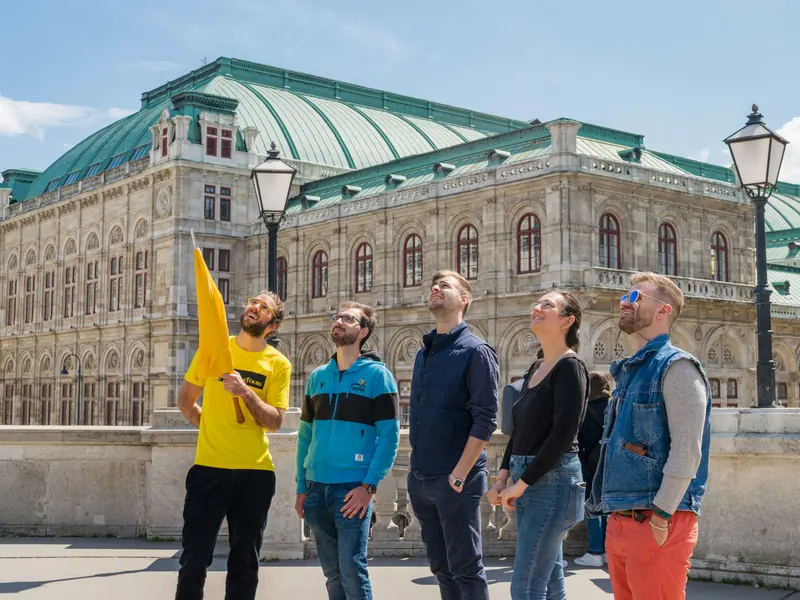
Guide's tip: the easiest way to see several of these customs in one evening is to walk them with a local. Our Christmas market tour with tastings visits three markets with hot punch and food tastings, the private Christmas market tour goes at your pace, and the Schönbrunn Christmas market tour pairs the palace with its market. Prefer daylight? Join our free walking tour of the historical city centre.
Frequently asked questions
When does Advent start in Vienna in 2026?
The first Sunday of Advent is 29 November 2026. The other candle Sundays are 6, 13 and 20 December. Many Christmas markets open earlier: Schönbrunn on 6 November and Rathausplatz on 13 November.
Is Krampus scary for children?
He is meant to look scary, with horns, fur and bells. The big Krampus runs with many masked figures take place mainly in Alpine towns, and clashes with spectators do happen there. Sensitive children are better off meeting the friendly Nikolo on 6 December.
What is the difference between Punsch and Glühwein?
Glühwein is always hot spiced wine, red or white. Punsch has no fixed recipe and can be made with fruit juice, tea, wine or rum. Both are served in a mug with a deposit.
Who brings the presents in Austria, Santa or the Christkind?
Traditionally the Christkind, on the evening of 24 December. Children write their wishes to the Christkind, and the presents arrive that evening. Santa Claus is known, but most Austrians stick with the Christkind.
Photo: PHILIP János, CC0, via Wikimedia Commons